Long Island Chimney Service: What Homeowners Need to Know
A practical guide to chimney cleaning, inspection levels, LI-specific corrosion risks, and real cost ranges across Nassau and Suffolk.
Long Island has over 800,000 single-family homes. A large share of them have fireplaces, wood stoves, or gas appliances that vent through a masonry or factory-built chimney. Most of those chimneys were last serviced whenever the last owner got around to it, which is often years ago.
What chimney service actually covers, what it costs, and when specific types of work are needed are questions homeowners search for constantly — and often get vague or misleading answers to. This guide is written from the perspective of doing this work on Long Island for over 15 years.
What chimney services Long Island homeowners actually need
The core services fall into four categories. Understanding what each covers helps you have a productive conversation with any chimney company.
Chimney cleaning (sweeping)
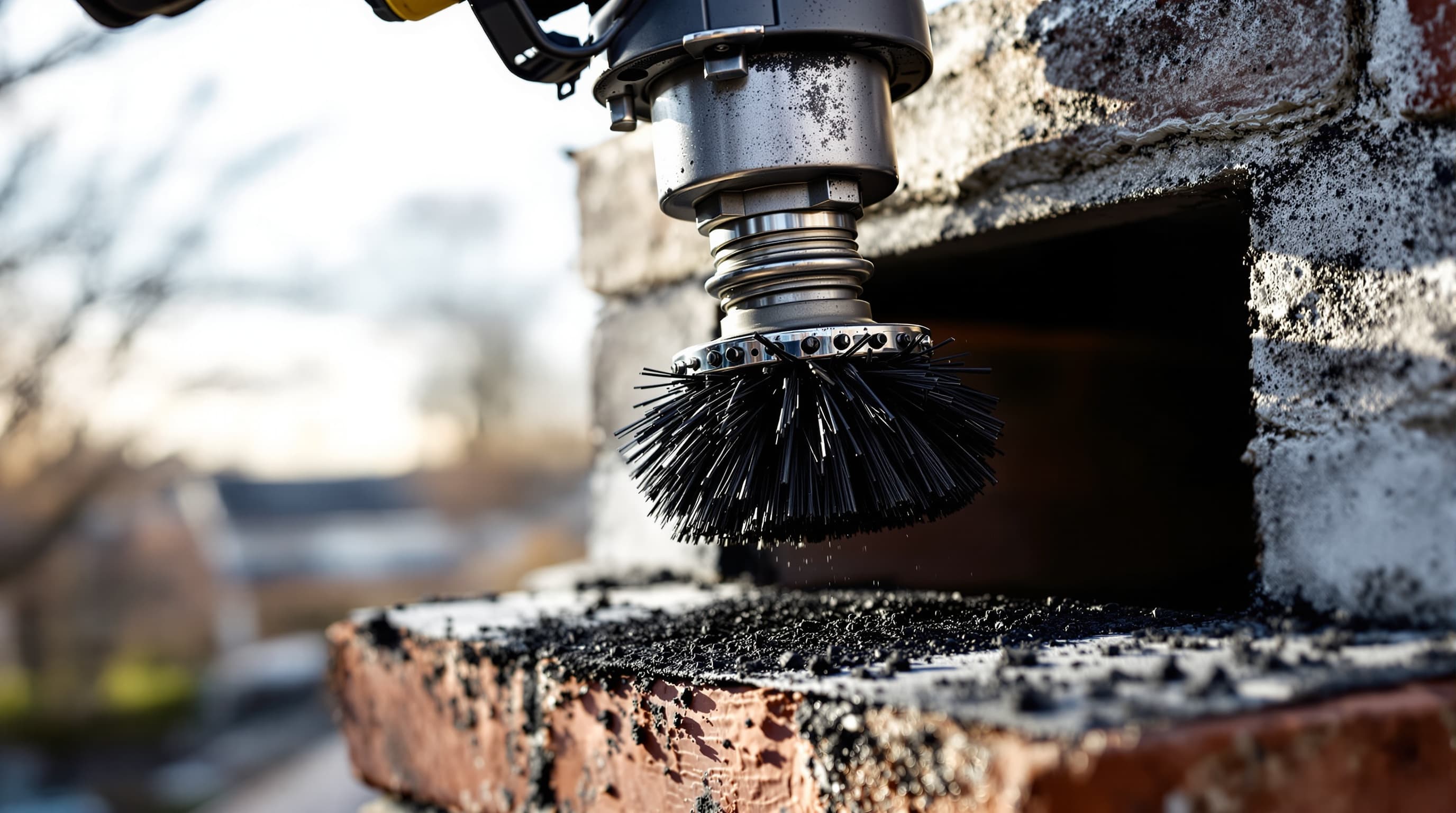
Removal of creosote, soot, ash, and debris from the firebox, smoke chamber, and flue. For wood-burning systems, this is the most common annual service. The scope expands based on how much creosote is present and what stage it has reached. Stage 1 (light soot) is straightforward; Stage 2 (flaky or crunchy deposits) takes longer; Stage 3 (glazed creosote) is a separate process entirely.
Chimney inspection
Visual or camera-assisted evaluation of the entire chimney system from the firebox through the flue to the crown and cap. NFPA 211 defines three levels of inspection (covered in detail below). Inspection and cleaning are often scheduled together in a single visit.
Chimney repair
Covers a wide range of work: tuckpointing and repointing mortar joints, chimney cap and crown repair or replacement, flashing repair, smoke chamber parging, firebox repair, and partial chimney rebuilds. Some repairs are surface-level; others require scaffolding or interior access.
Chimney relining
Installation of a new liner inside the existing chimney structure. Usually stainless steel flexible liner for gas and solid fuel systems, or cast-in-place liner for masonry systems. Required when the existing clay tile liner has failed or when changing fuel types.
See our full services page for detailed descriptions of each service we offer across Nassau and Suffolk.
CSIA certification and why it matters
CSIA stands for Chimney Safety Institute of America. A CSIA-Certified Chimney Sweep has passed a standardized exam covering chimney construction, combustion science, NFPA 211 standards, and inspection methodology. Recertification is required every three years.
From a practical standpoint, CSIA certification matters in two situations on Long Island. The first is insurance claims. If you have a chimney fire or carbon monoxide incident and file a claim, the adjuster will ask for service records. A written inspection report from a CSIA-certified sweep carries more weight than one from an uncertified contractor. The second situation is real estate transactions. Attorneys representing buyers in Nassau and Suffolk routinely require a Level II inspection from a CSIA-certified technician as part of home purchase contingencies.
You can verify a sweep's CSIA certification at the CSIA website before booking. Ask for the certification number if it's not displayed prominently.
Long Island-specific chimney challenges
Long Island has a set of environmental and housing stock characteristics that create specific chimney problems you won't read about in generic home maintenance guides.
Salt air corrosion
Properties within roughly two miles of open water on the South Shore or North Shore face accelerated corrosion on metal chimney components. Stainless steel liners, chimney caps, and flashing all corrode faster in the salt-heavy marine environment. Standard galvanized steel caps have a dramatically shortened lifespan on waterfront properties — stainless steel or copper caps are worth the higher initial cost. We see liner corrosion and flashing failure about 30% earlier on coastal Nassau and South Shore Suffolk properties than on comparable homes further inland.
Freeze-thaw damage on masonry
Long Island sits in a climate zone that gets genuine freezing winters but also frequent above-freezing days throughout the cold season. This cycling between freeze and thaw is the most destructive condition for masonry chimney work. Water infiltrates micro-cracks in brick and mortar, freezes and expands, then thaws — widening the crack with each cycle. Homes built in the 1950s through 1970s with original mortar joints are at the point where this process has done compounding damage over decades.
Annual inspection catches this early. Tuckpointing mortar joints before water gets deep into the brick is a fraction of the cost of rebuilding a chimney section after the freeze-thaw cycle has split the masonry.
Aging terra cotta liners
The majority of Long Island homes built before 1980 have terra cotta tile liners. These liners have a design life of roughly 50 years under normal use. Many are now at or past that point, and a large portion were never properly sized for the appliances they vent. A Level II camera inspection will show whether the liner tiles are cracked, spalling, or missing sections. On older properties in Nassau County towns like Hempstead, Valley Stream, and Elmont, or Suffolk County communities like Brentwood and Central Islip, failing terra cotta liners are extremely common on any chimney that hasn't been recently serviced.
"NFPA 211 requires annual inspection of chimneys, fireplaces, and solid fuel-burning appliances. The standard exists because chimney fires and carbon monoxide incidents are preventable."
Annual inspection requirements and NFPA 211
NFPA 211 is the National Fire Protection Association's standard for chimneys, fireplaces, vents, and solid fuel-burning appliances. It is the reference document every CSIA sweep, insurance adjuster, and building inspector uses. NFPA 211 requires that all chimneys, fireplaces, and solid fuel-burning appliances be inspected at least once per year.
The standard also requires sweeping and cleaning when the accumulation of combustible deposits reaches 1/8 inch. For most active wood-burning fireplaces, this threshold is reached within a single burn season.
NFPA 211 is a referenced standard in most homeowner insurance policies. If you have a chimney fire and your insurer finds you had not had an annual inspection, expect a coverage dispute.
Level 1, Level 2, and Level 3 inspections explained
NFPA 211 defines three inspection levels with different scopes and different use cases. Understanding which one you need avoids unnecessary expense or, more importantly, an under-scoped inspection that misses a real problem.
Level I Inspection
$195–$275, usually bundled with a sweepWhen you need it
Annual service, no change in use or appliance
Scope
Visual inspection of all accessible portions of the chimney, connector, and appliance. Covers the firebox, smoke chamber, exterior chimney, and accessible flue sections. No special tools beyond a flashlight and a mirror.
Level II Inspection
$395–$550When you need it
Property sale, fuel type change, after a chimney fire, post-storm damage
Scope
Everything in Level I plus a video camera scan of the entire flue from cap to firebox, plus inspection of accessible attic, basement, and crawl space sections. Provides documentation of interior flue conditions — required by most Nassau and Suffolk real estate attorneys for closings with fireplaces.
Level III Inspection
$650–$2,500+ depending on scope of demolitionWhen you need it
Level II found evidence of serious hazards in concealed areas
Scope
Opens up concealed portions of the chimney — may involve removing drywall, siding, or masonry — to access areas that can't be seen in a Level II. Typically triggered by a Level II finding or insurance claim investigation.
See the full breakdown of all three inspection types in our chimney inspection levels guide.
Cost ranges for chimney services on Long Island
These are actual 2026 market ranges for Nassau and Suffolk County. Not national averages — Long Island prices.
Chimney cleaning (Level I sweep)
$150–$350
Higher for multi-story, oil flues, or Stage 2 creosote
Level I inspection
$195–$275
Often bundled with cleaning
Level II camera inspection
$395–$550
Required for real estate closings and post-fire assessment
Chimney cap replacement
$175–$450
Stainless steel or copper recommended near coast
Tuckpointing / repointing
$350–$1,200
Depends on height and extent of mortar deterioration
Chimney crown repair
$250–$600
Full crown replacement runs higher
Stainless steel relining
$2,500–$8,000
Varies with flue height, liner diameter, and configuration
Chimney rebuild (partial)
$1,500–$6,000
Full chimney rebuilds above roofline are at the higher end
For a detailed look at cleaning prices and what drives them, read our Long Island chimney sweep cost guide.
Nassau vs. Suffolk permit requirements for chimney work
Permit requirements for chimney work in Nassau and Suffolk vary by municipality and by scope of work. Here's the general framework, though you should always confirm with your specific town building department before scheduling major work.
Work that typically does NOT require a permit
- Routine cleaning and inspection
- Chimney cap replacement
- Minor tuckpointing and repointing
- Chimney crown repair or replacement
- Flashing repair (not full replacement)
- Standard stainless steel liner installation (in most Nassau towns)
Work that typically DOES require a permit
- Full chimney rebuild above the roofline
- Adding a new chimney or fireplace
- Converting from one fuel type to another
- Installing a new gas insert with new venting
- Any structural change to the chimney
- Major relining in some Suffolk towns
Nassau County towns and Suffolk County towns have separate building departments with different thresholds for what triggers a permit. In some Nassau towns, liner work requires a permit; in others, it does not. Always call your town building department before scheduling work that could be in the gray zone.
Wood-burning vs. gas vs. pellet stove chimney differences
The type of fuel you burn determines what kind of chimney servicing you need, how often, and what the flue requirements are.
Wood-burning fireplaces and stoves
Wood burning produces the most creosote and requires the most frequent cleaning. Annual sweeping is standard for any active wood-burning system. The flue must be properly sized for the firebox opening (typically the flue area should be at least 1/10 of the fireplace opening). Clay tile or stainless steel liners are both appropriate for wood-burning. Stainless steel liners are required for high-efficiency wood-burning inserts on Long Island.
Gas fireplaces and gas appliances
Gas produces significantly less visible creosote but still requires annual inspection under NFPA 211. Gas systems can produce condensation that corrodes liners and connectors over time. Many Long Island homes converted from oil heating to gas in the last two decades, and the existing oil-sized flue is often too large for the gas appliance — a properly sized liner is required for safe venting. If you converted from oil to gas and never had the flue relined, this is a critical service to schedule.
Pellet stoves
Pellet stoves burn at higher efficiency than wood and produce less creosote, but they produce a fine, powdery ash that can accumulate quickly. Most pellet stoves are vented through a dedicated direct-vent system or through a stainless steel liner in an existing chimney. The venting system requires annual inspection and cleaning — don't skip it just because pellets seem "cleaner" than cord wood. Pellet ash is highly caustic and will corrode an undersized or improperly maintained liner.
Chimney service across Long Island
We serve homeowners throughout Nassau and Suffolk County, from the East End to the Nassau-Queens border. Service area pages with local information are available for the major areas we cover.
View all service areasFrequently asked questions about Long Island chimney service
Schedule a chimney inspection or cleaning on Long Island
CSIA-certified sweeps serving Nassau and Suffolk County. Book online and we'll call to confirm your appointment.
Ready to schedule? We'll be out this week.
Rosa or Frank will call you within 2 business hours to set up a free on-site estimate. No high-pressure sales. No gimmicks.