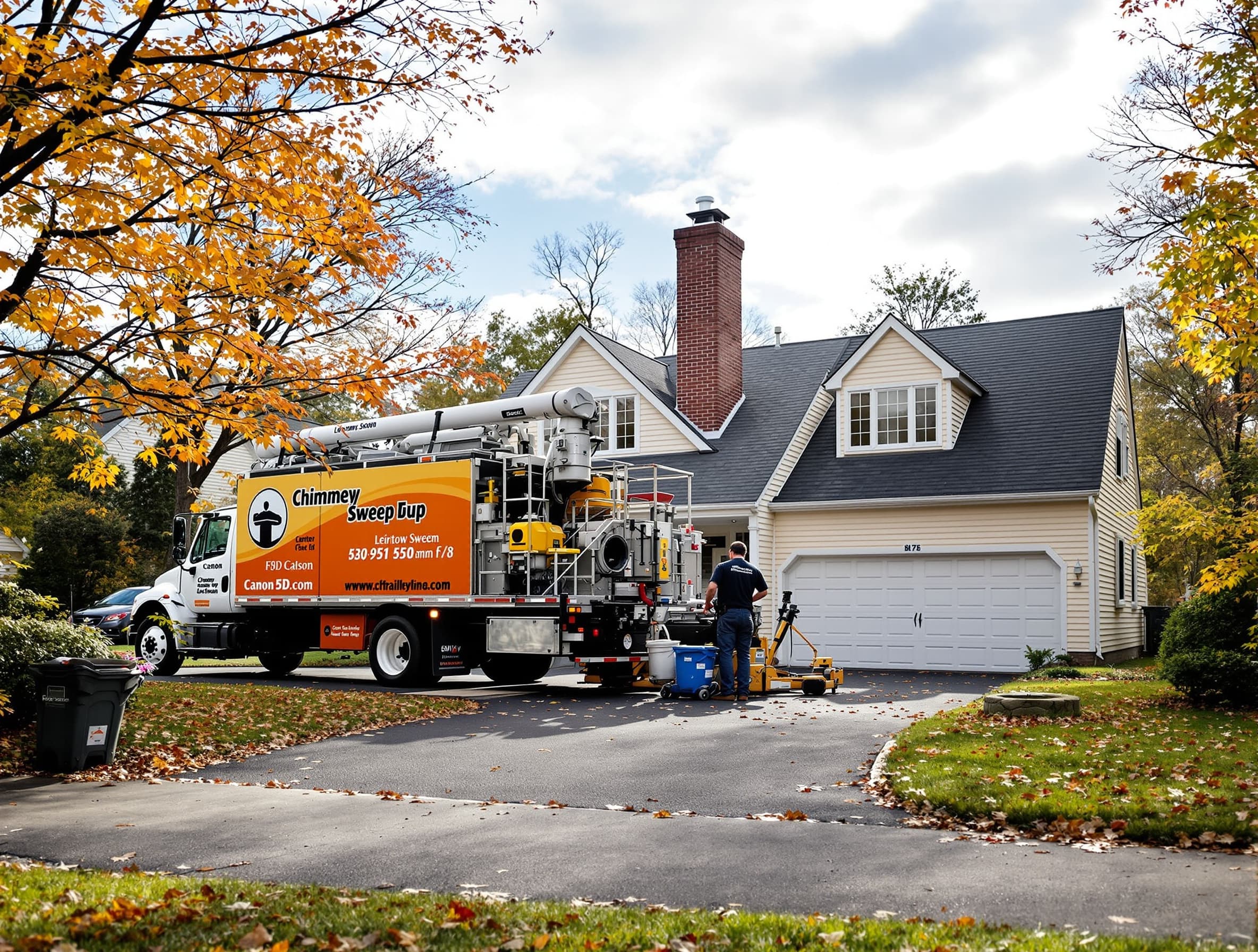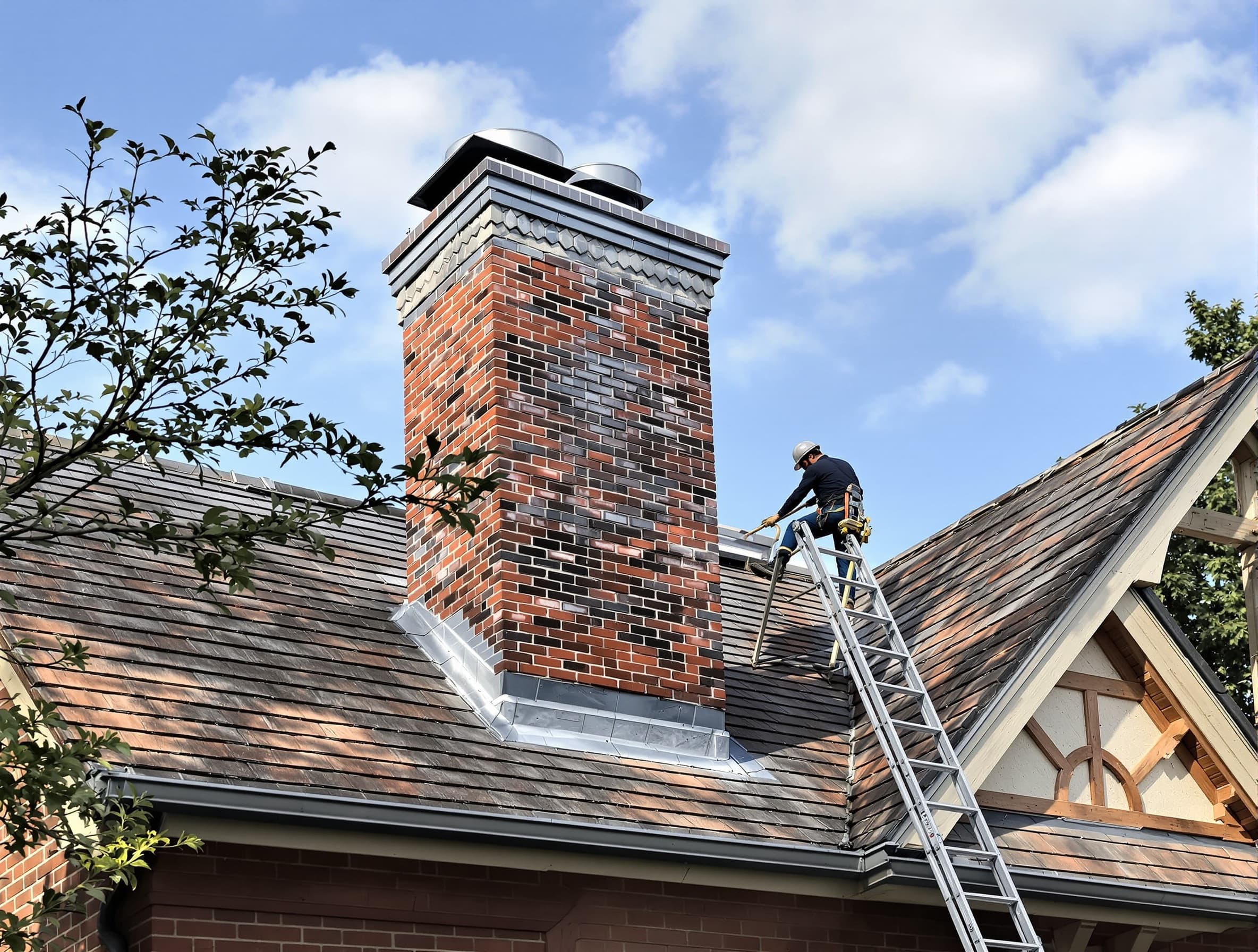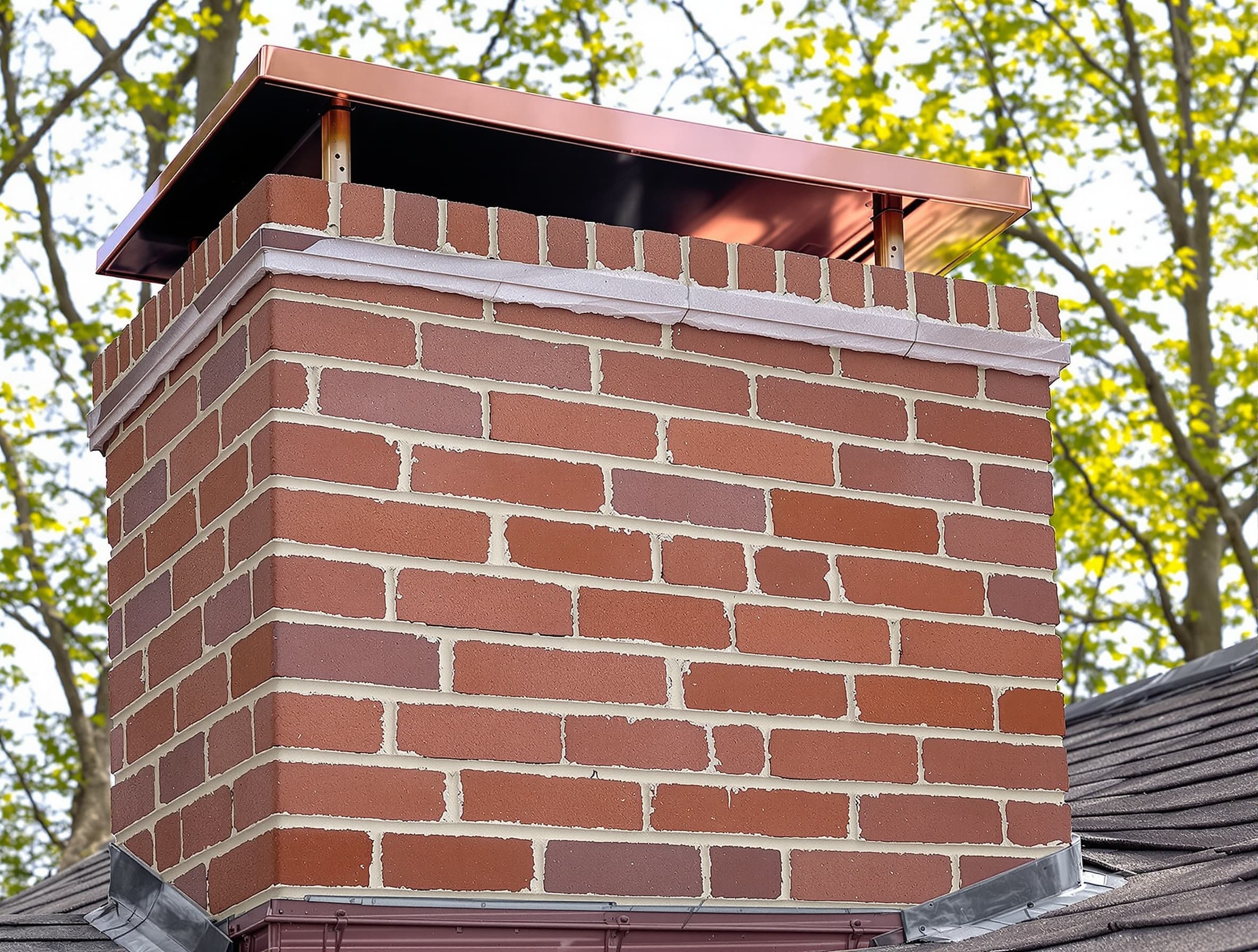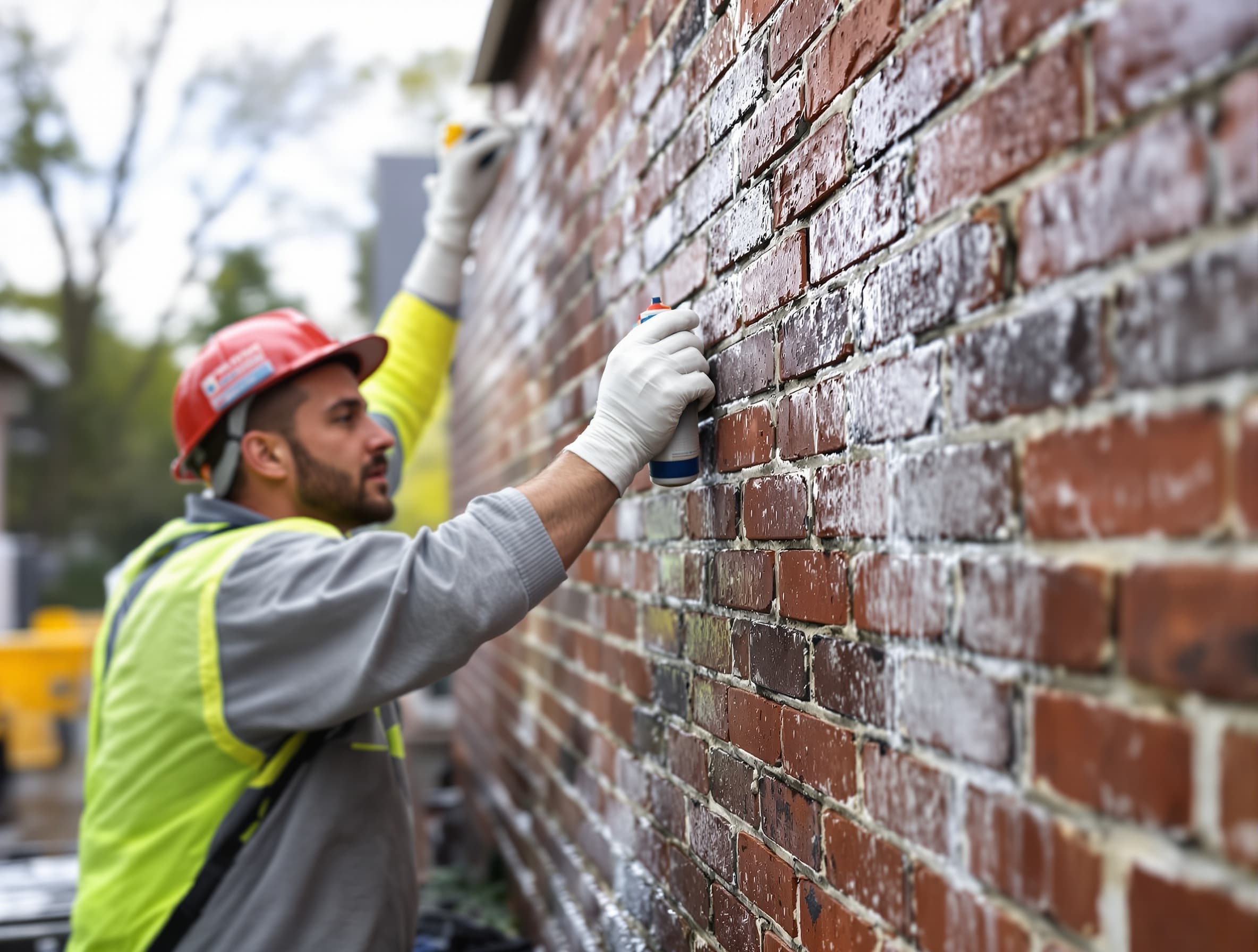
Most companies use "tuckpointing" and "repointing" interchangeably. They're actually different jobs.
Repointing = removing and replacing deteriorated mortar joints. What most chimneys actually need.
Tuckpointing = a historic decorative technique where two mortar colors are used to create the appearance of thin, precise joints on what's actually rough brick. Victorian-era technique. Rarely needed, often confused.
When we say "tuckpointing" we mean the real thing when called for, and proper repointing when that's what the chimney needs. Paul, our mason, has done both correctly for 25 years.
The mortar joint problem
Mortar has a shorter lifespan than the brick it holds together — typically 25-50 years on Long Island. When it fails, you'll see:
- Crumbly, powdery joints
- Missing mortar (you can see gaps through)
- Stair-step cracks across joints
- Spalling (face) damage to adjacent bricks
- Water stains on interior walls
Failing mortar lets water into the brick. Water freezes, expands, and spalls the brick face. Once brick is spalled, it's usually not salvageable — you need full replacement.
Our repointing process
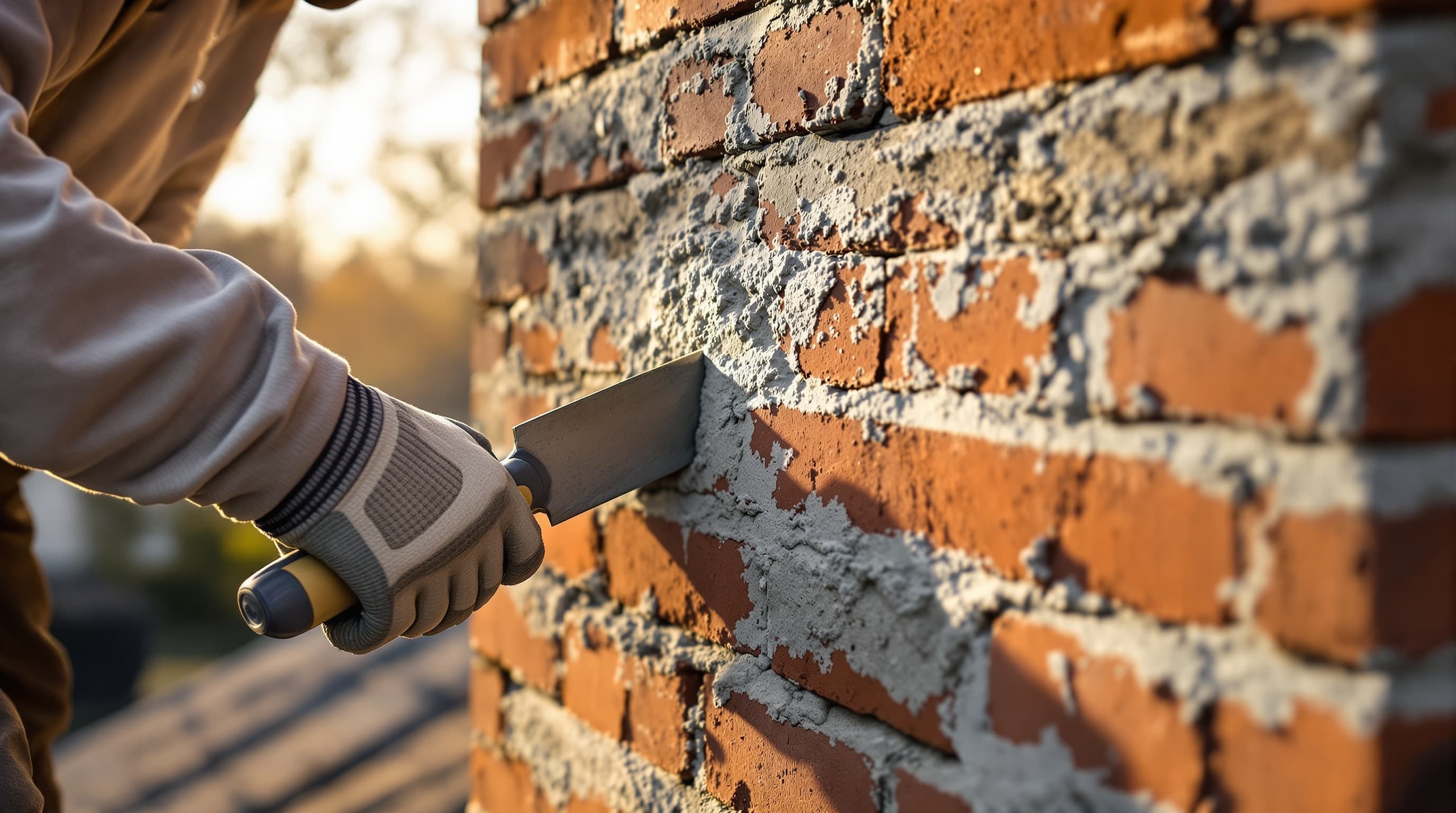
- Grind out old mortar. 3/4-inch minimum depth, power grinder with diamond blade. Clean joints.
- Wet the joints. Dry brick sucks moisture from new mortar, weakening the bond.
- Mix mortar to match. Type-N for most chimneys (ASTM C270). Color matched on-site using pigments, lime, and sand samples.
- Pack joints tight. Multiple passes with appropriately sized trowel. Struck, tooled, or weathered finish depending on original.
- Brush and cure. Brush joints clean after initial set. Keep damp for 3 days for proper cure.
Beyond joint work, we handle:
- Spalled brick replacement — match color, size, texture
- Partial chimney rebuild — typically above roofline, 4-10 courses
- Full chimney rebuild — structural cases, rare
- Crown rebuild — 3-inch concrete cap with overhang and drip edge
- Firebox rebuild — firebrick with refractory mortar
- Smoke chamber parge — smooth interior for better draft