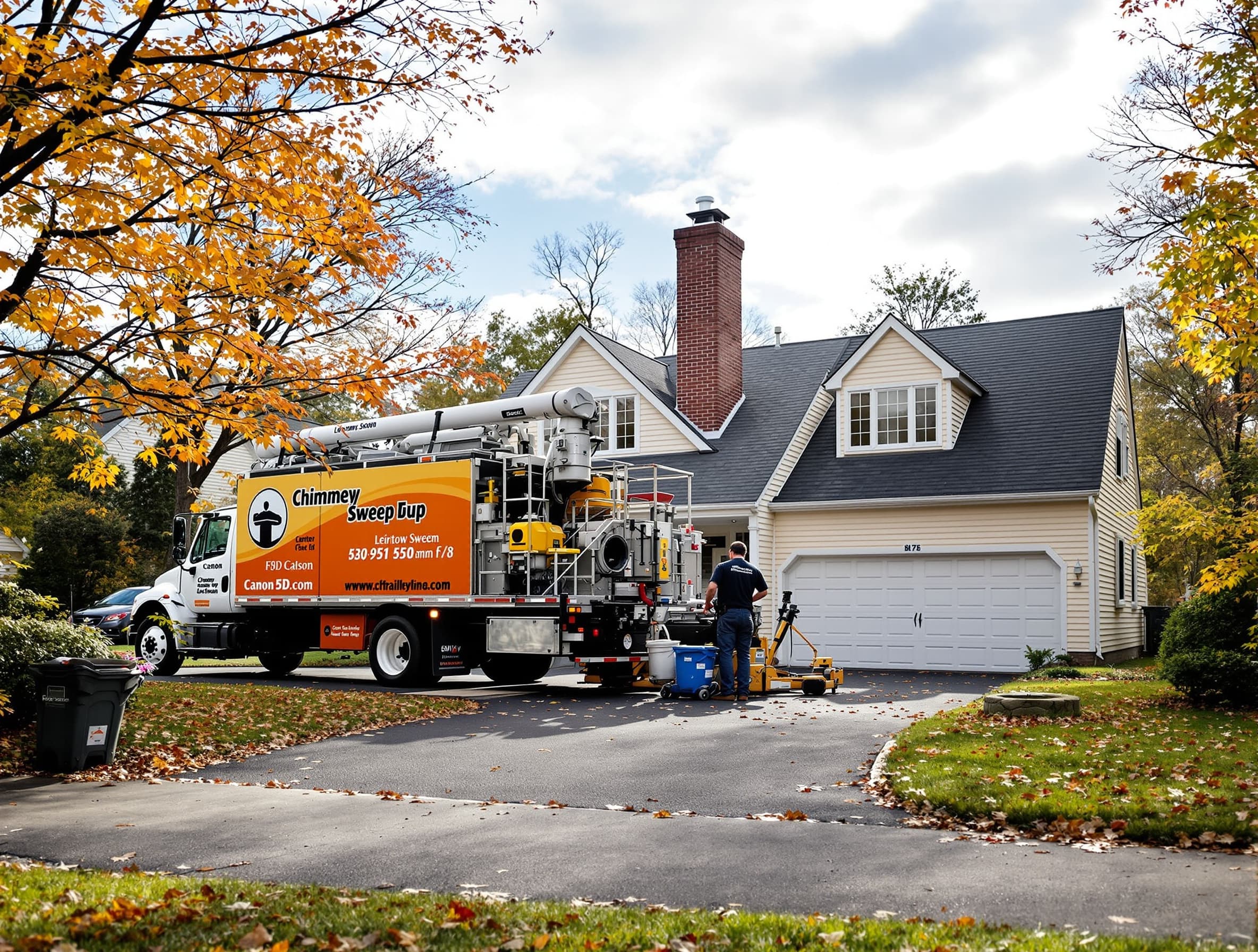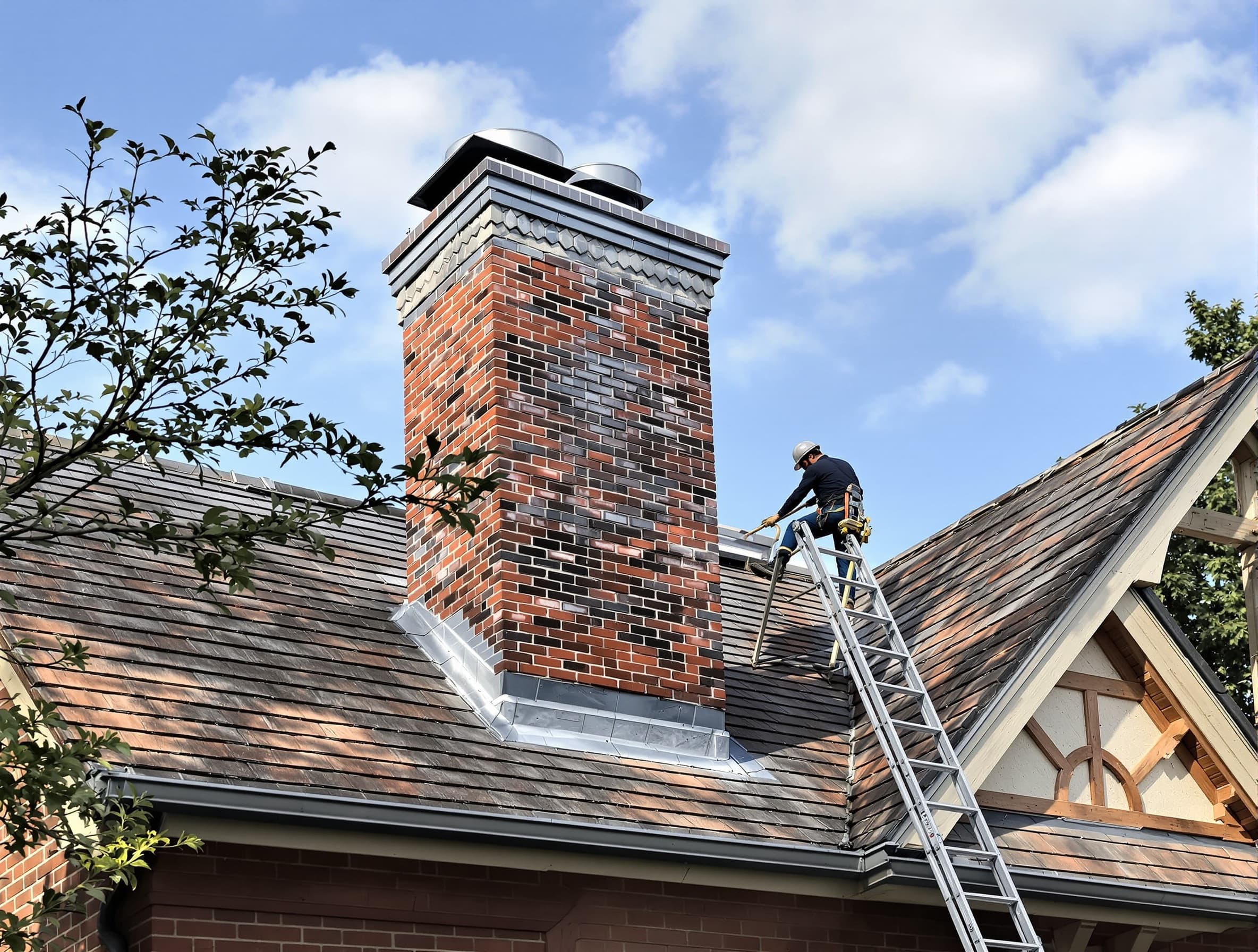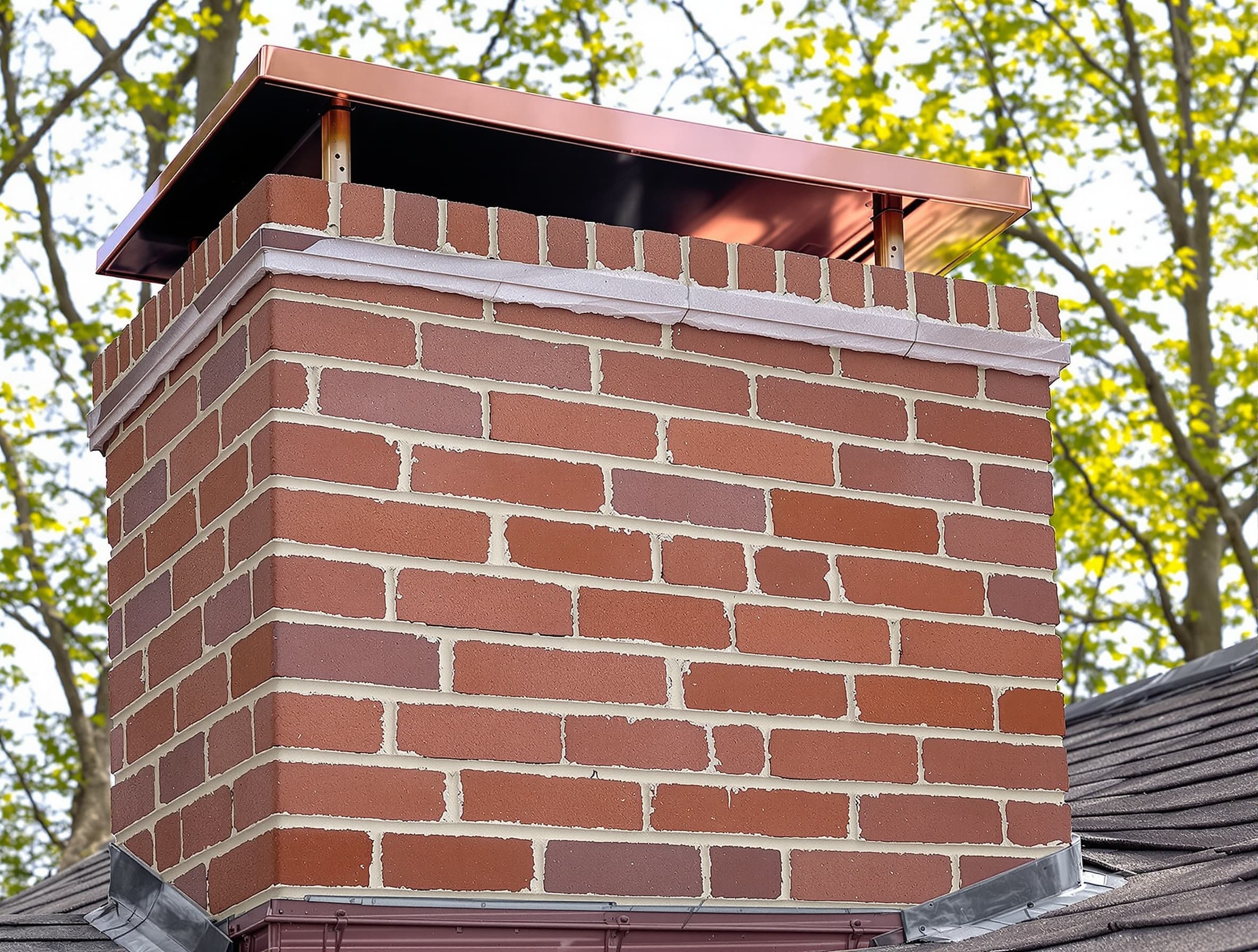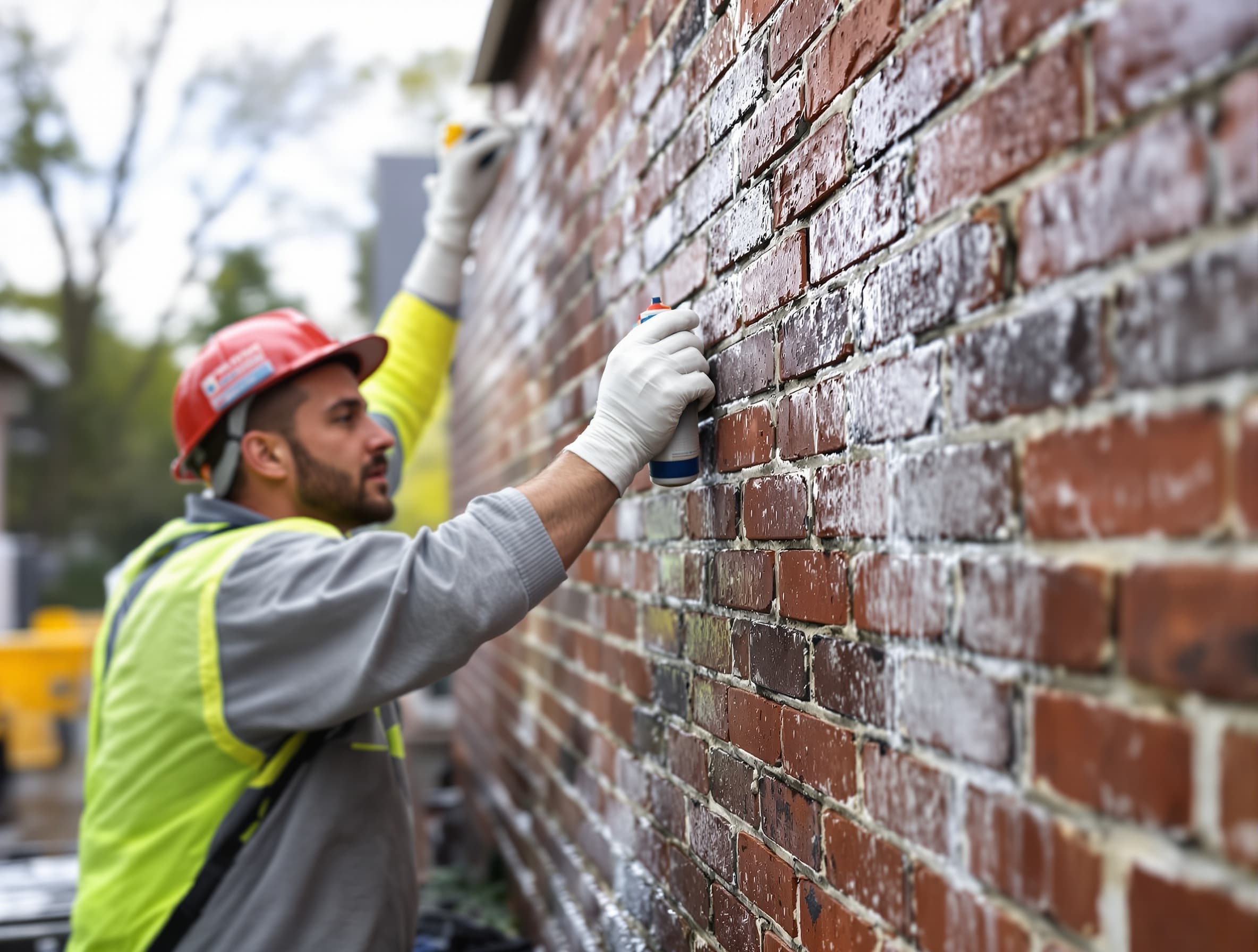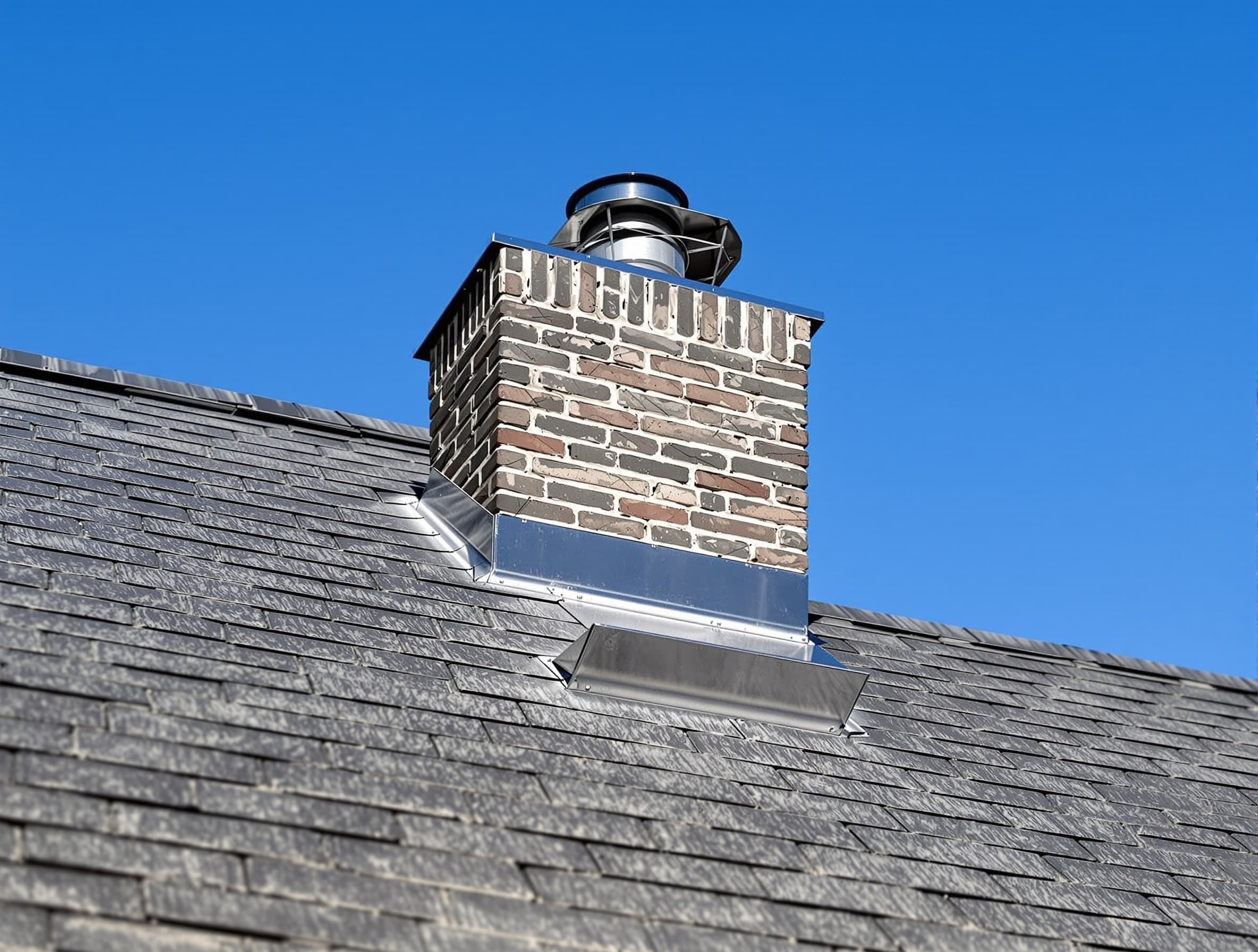
Water is the #1 killer of Long Island masonry chimneys. Salt air, freeze-thaw cycles, and 50-inch annual rainfall turn tiny mortar cracks into spalled brick in a few seasons.
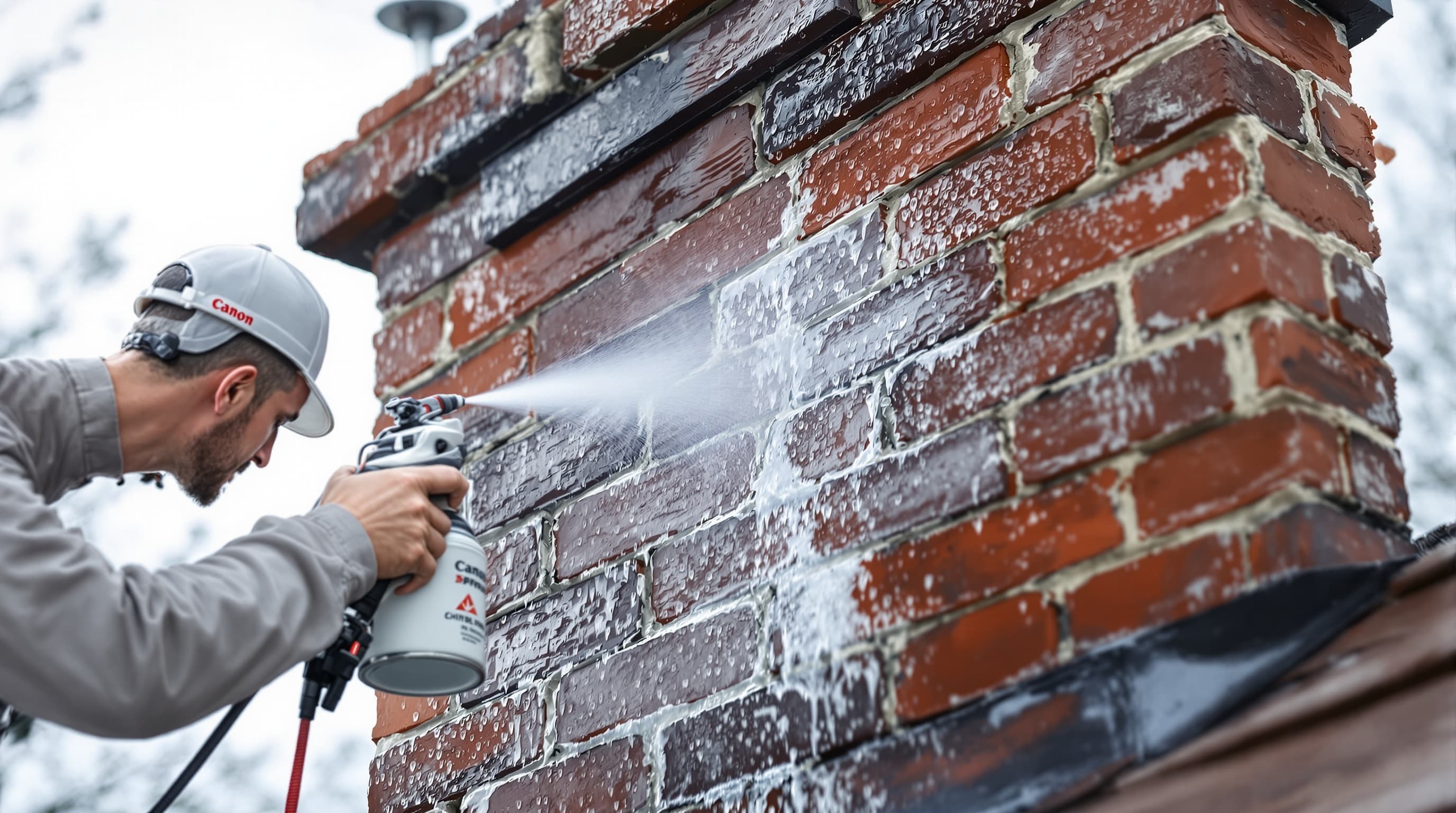
Waterproofing seals the exterior masonry against water entry while letting the chimney "breathe" — meaning moisture inside the brick can still escape. Common paint-on sealants trap moisture and cause worse damage. Proper waterproofing uses vapor-permeable chemistry.
What we apply
ChimneySaver Water Repellent — siloxane-based, vapor-permeable sealant designed specifically for masonry chimneys. Penetrates into the brick and mortar, bonds chemically, creates a water-repellent surface that still allows water vapor to pass outward. 10-year manufacturer warranty.
Crown Coat — elastomeric flexible sealant for the concrete or mortar crown at the top of the chimney. Bridges hairline cracks, resists UV, stays flexible through thermal cycling.
Flash Seal — used on the flashing-to-brick joint where roof and chimney meet. One of the top leak sources.
What we DON'T use
- Acrylic paint-on sealants that trap moisture (eventual spalling)
- Silicone caulk-style products on masonry (cracks within a season)
- Generic hardware-store "waterproofers" that aren't designed for chimneys
- Products without written manufacturer warranty
When to call us
- Visible water stains on interior walls near chimney
- White efflorescence (calcium deposits) on exterior brick
- Mortar joints visibly deteriorating
- After repointing — waterproof to protect the investment
- After a full crown rebuild
- Anytime the chimney is older than 15 years and has never been sealed
Prerequisites
Waterproofing only works on a structurally sound chimney. If mortar joints are deteriorated, repoint first. If the crown is cracked, rebuild first. If the cap is missing, install one. Then waterproof. Sealing a failing chimney just postpones the inevitable and makes future repairs harder.
Our process
- Inspect. Identify repointing, crown, or cap issues that need to be addressed first.
- Clean. Power-wash or hand-clean masonry surface. Remove dirt, efflorescence, loose material.
- Dry. Surface must be dry before sealant application. We schedule around weather.
- Apply crown coat. Elastomeric coating rolled/brushed on crown with edge detail for drip edge.
- Apply ChimneySaver. Two coats wet-on-wet to saturation. Proper flood-coat technique, not spray-and-run.
- Flashing seal. Secondary seal on flashing-to-brick joint if needed.
- Cure. 24 hours curing before rain exposure ideal.