# Long Island storms and chimneys
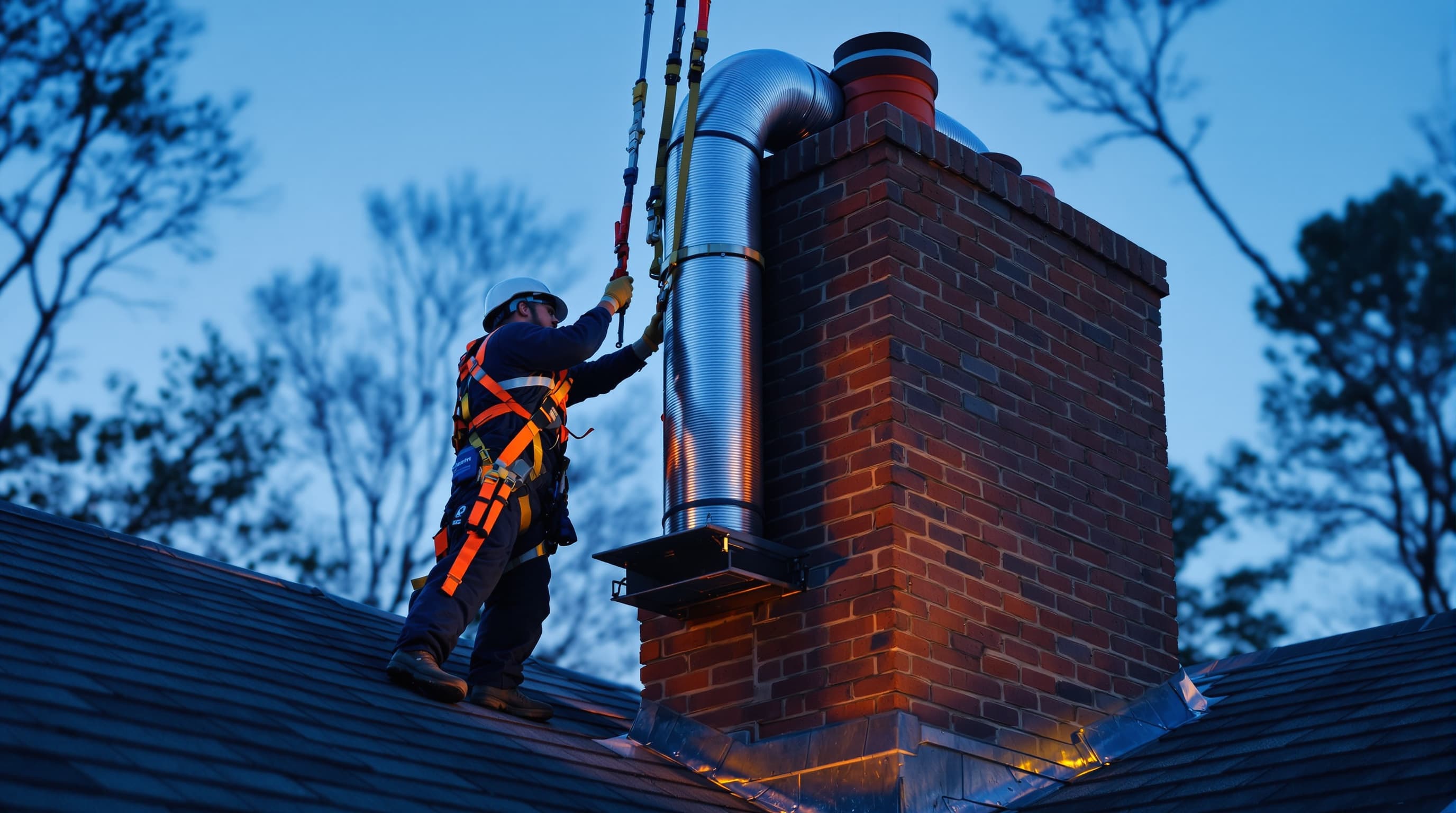
Nassau and Suffolk average 2-3 serious storms a year that damage chimneys — nor'easters in winter, occasional hurricane remnants in fall. Wind gusts over 50 mph can snap off chimney caps, crack crown mortar, tear flashing, and occasionally blow the top courses of brick right off a chimney.
Most homeowner insurance policies cover "sudden and accidental" damage from wind and falling objects. That includes chimney damage from storms. But getting a claim paid requires documentation that matches what your insurance company expects to see.
Here's what works on Long Island.
What's usually covered
Under a standard HO-3 or HO-5 policy (what most Long Island homeowners carry):
- Wind damage to the chimney structure, crown, cap, or flashing
- Falling objects — tree limbs hitting the chimney, ice chunks sliding off an upper roof and cracking the crown
- Lightning strikes — direct hits that crack masonry or damage the flue liner
- Water damage from storm-driven rain entering through wind-damaged flashing (sometimes covered, sometimes excluded — depends on the policy)
What's usually NOT covered
- Wear and tear. If your mortar joints were already failing and a storm just finished the job, your insurer will often call it maintenance-related and deny the claim.
- Pre-existing damage. Cracks that predate the storm.
- Gradual water intrusion. Damage from chronic leaks over years is excluded under "wear and tear" clauses.
- Cosmetic damage. Some insurers treat replacing missing brick as "cosmetic" if the structure is still sound — though this is case-by-case.
This distinction is the whole ballgame. A good inspection report documents that the damage is new and storm-caused, not old and maintenance-related.
The seven-day window
Most insurance policies require you to report storm damage within a reasonable time — typically 30 days, but the sooner the better. On Long Island, after a major nor'easter or hurricane, adjusters get backed up for months. If you wait too long, the claim can be denied as "reporting delay."
Call your insurance company within 7 days of the storm. Take photos from the ground before you call. Then book an inspection.
What we document in a storm damage inspection
We've generated around 150 storm damage reports for Long Island insurance claims over the last three years. Every report includes:
- Date of inspection and estimated date of damage. If the storm was named (Ida, Isaias, a specific nor'easter), we reference it.
- Exterior photos from the ground and the roof. Multiple angles, showing the damage clearly.
- Interior photos from the firebox up, if accessible.
- Camera footage of the flue showing any debris, cracks, or dislocated tiles.
- Diagnosis separating storm damage from pre-existing conditions. This is critical — we specifically call out what's new and what's pre-existing. Insurers respect this.
- Itemized repair estimate with materials and labor broken out.
- Written statement that the damage is consistent with wind/impact/storm forces and does not appear to be maintenance-related deterioration.
Most insurers accept our reports without requesting additional documentation. The few times we've been asked for more, it's usually been "can you date-stamp the photos" or "can you add a separate line for the missing cap" — both trivial to add.
What to do right now if you've got storm damage
- Don't go up on the roof. Chimney damage after a storm can destabilize the structure. A contractor with safety equipment needs to assess first.
- Take ground-level photos. From every side of the house if possible. Get the missing cap, the displaced flashing, the visible cracks. Timestamp-enabled camera apps are ideal.
- Tarp if water is entering. If water is pouring through the chimney into your living space, a tarp over the chimney top prevents additional damage. We offer emergency tarp service on Long Island within 24-48 hours.
- Call your insurance company to report the claim and get a claim number.
- Call us. We'll come out, document everything, and provide an insurance-ready report usually within 24 hours of inspection.
Common claim denial reasons (and how we avoid them)
| Denial reason | How to avoid |
|---|---|
| "Pre-existing damage" | Inspection report specifically calls out what's new vs. old |
| "Wear and tear" | Report dates the damage to the named storm |
| "Insufficient documentation" | Photos from multiple angles, camera footage of flue |
| "Late reporting" | File within 30 days, ideally within 7 days |
| "Cosmetic only" | Report documents structural implications (water entry, draft compromise, etc.) |
What we don't do
We don't inflate estimates to help you get a bigger claim paid. That's insurance fraud and it puts our license at risk. We quote the job we'd actually do at the price we'd actually charge.
We also don't work directly with insurance adjusters as "public adjusters." That's a licensed role we're not licensed for in New York. We're a chimney contractor providing honest documentation. Your adjuster deals with your insurance company; we deal with your chimney.
Book a storm damage inspection
If a storm hit Long Island and your chimney looks different than it did yesterday, book an inspection. Mention "storm damage" in the form and we'll prioritize — most storm inspections get scheduled within 48 hours.